This article contains a hidden message stating the title of my desired course. The message is hidden in plain sight using a well-established technique in the text, which has then been further processed using a standard Oulipo approach.
Read MoreThe most recent article I wrote for a client is characterised by 24 pieces of data. More correctly: metadata.
Read MoreReview of a collection of writings from the Oulipo, including minutes of meetings, lectures and correspondence.
Read MoreWhat do these pieces of writing have in common, apart from being examples of creative nonfiction about blues music?
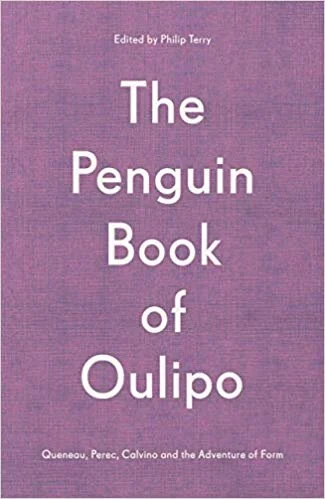
Read MoreIf your interest in the Oulipo goes beyond simply trying out their techniques, and you wish to learn about the context in which it was conceived and the developments in went through, you will find this book very useful.
Read MoreWorking within a limit of 100 words is both terrifying and liberating.
Read MoreThe trouble with detective fiction.
Read MoreHomophones are words that sound the same but don’t mean the same, such as fare (food) and fare (cost of travel), or their and there. In Oulipo, you take a phrase and think of one which sounds like it. I believe that it is permissible to stretch the definition of “sounds like”, so I have taken advantage of that fact.
Read MoreMy Christmas, Oulipo-inspired message decoded.
Read MoreThe Oulipo Compendium, compiled by Harry Matthews and Alastair Brotchie, is in effect a dictionary/encyclopaedia of Oulipo. As such it is both comprehensive and easy to navigate.
Read MoreHow to use an Oulipo technique involving proverbs to get through writer’s block.
Read MoreIf you are a teacher of English or creative writing, you will find this book to be a rich source of material to discuss and analyse with your students. And if you are a writer, this book will I’m sure prove to be a good investment in extending your craft.
Read MoreYou may not believe this, but film-making and film studies on the one hand, and writing on the other, have a great deal in common.
Read MoreThe word Oulipo is an acronym of a French group, Ouvroir de littérature potentielle. This is usually translated as Workshop of Potential Literature, although given its association with the sharing and critique of work on creative writing courses, the word ‘workshop’ might be ditched in favour of ‘work room’.
Read MoreOne of the techniques employed by the Oulipo is known as N+7. This is where you take each noun, and replace it with a word that is seven words on in the dictionary. Of course, results vary according to what dictionary you use. The following article is an N+7 version of my review of the Penguin Book of Oulipo. Enjoy!
Read MoreMy first foray into the world of Oulipo.
Read More