I submitted my review of this book to Teach Secondary magazine, an educational magazine in the UK. The first review below is what the magazine published. The second one is what I actually wrote! In substantive terms there is little difference between the two, but you may find it interesting to see what the editor altered.
Published version
(Adam Aleksic, Ebury, £22)
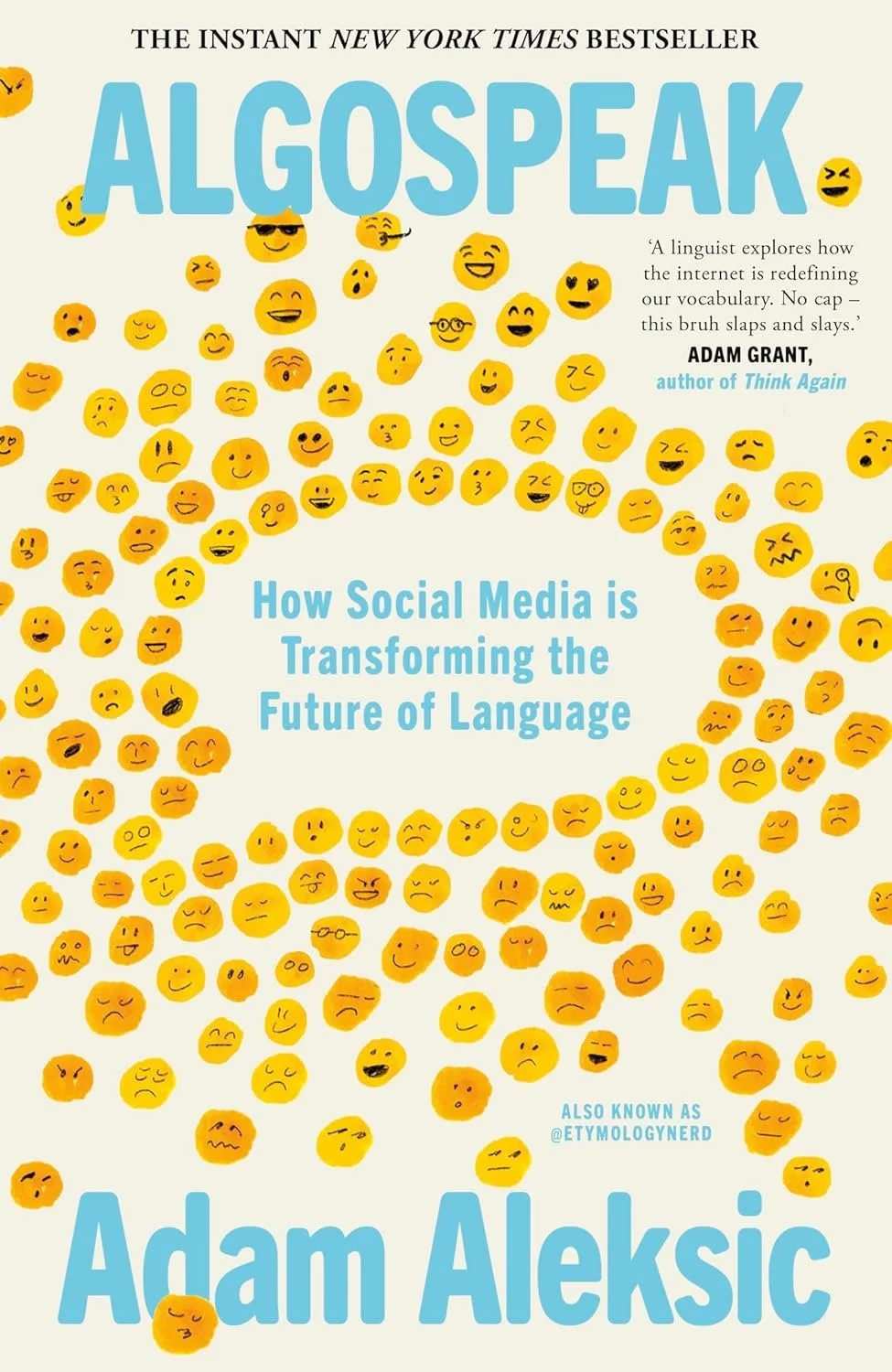
Click the pic to see this book on Amazon (affiliate link)
The 'algo' of the title, of course, refers to the 'algorithms' that govern social media platforms and power efforts at regulating (or indeed censoring) the internet. They work by latching on to certain words and phrases, prompting internet users to respond by deliberately using alternative words or misspellings.
The algorithms are eventually adjusted to compensate, resulting in what Aleksic likens to a game of virtual 'whack-a- mole'. From a linguistic point of view, at least, it's a fascinating process that neatly demonstrates how language evolves and adjusts according to changes in culture.
This is a book that can offer a useful guide to how internet trends develop, provide a few handy hints on how to make content go viral, and perhaps even help you better understand the way your students talk...
My original version
The “algo” part of the title refers to algorithm. In our world of social media and attempts at internet regulation or even censorship, algorithms are in place to catch “suspect” words and phrases. People respond by using alternative words or spellings, to which the algorithms are adjusted, resulting in a “game” of virtual leap-frog: the author likens it to “whack-a-mole”.
From a linguistic point of view, this process is fascinating, and represents a live demonstration of how language evolves and adjusts according to changes in culture. From an online safety perspective, however, the situation may not seem quite so sanguine. As well as language changes over time, it also differs between different communities. For some of us, the book provides a useful guide to some of the terms in use, and a few handy hints on making content go viral. Perhaps this book will help teachers better understand the way students speak.