The standard advice for writers who are feeling uninspired or blocked is to allow your mind to wander where it will or to just start writing aimlessly to see what happens. Therefore to suggest the opposite approach, that of imposing some constraints on your thinking, seems completely counterintuitive.
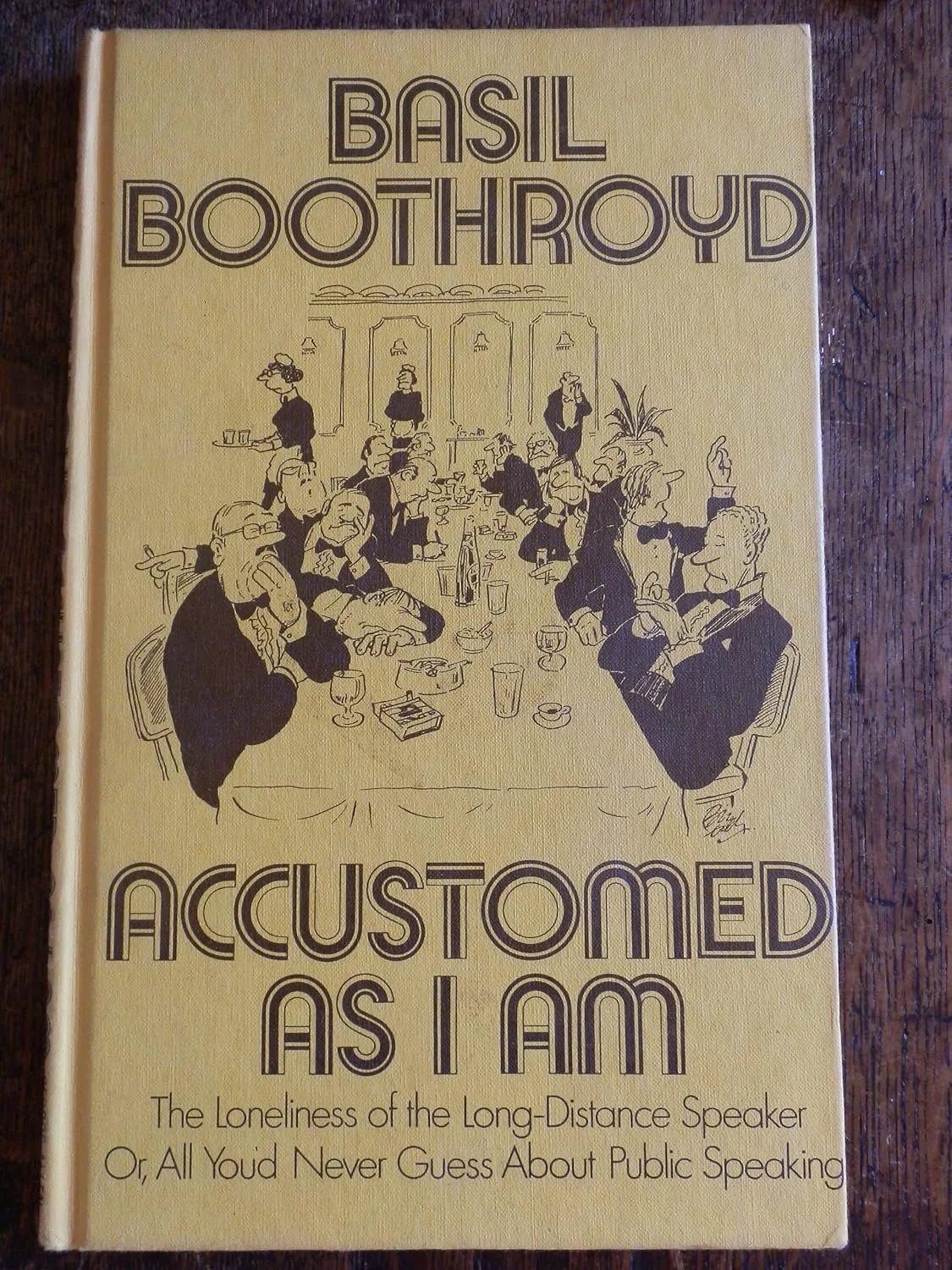
Read MoreAs the title suggests, it’s about Basil Boothroyd’s (mis) adventures as a public speaker. In an anecdote I found particularly amusing …
Read MoreI often find that working on paper is better than working on a computer. For the initial outline anyway.
There are several reasons why working on – and with – paper is beneficial.
Read MoreThis wide-ranging book takes in probability, fractals, astronomy, Babbage, Lovelace, and a host of other areas and people.
Read MoreYou settle down to read, and the subject of this particular vignette could be you: a teacher, a student, a mother, a brother.
Read MoreWeimar, the birthplace of the optimistic but short-lived republic of the same name, a place called “home” by Goethe, Liszt and Nietzsche and a mere eight kilometres from Buchenwald.
Read MoreNo book about the craft of writing seems complete without a stern chapter on the importance of eschewing adverbs and adjectives - but what to put in their place?
Read MoreWhen it comes to communication, being restricted is definitely better, ie more conducive to effectiveness, than having no limits at all.
Read MoreConsider this a sort of masterclass if you like. I was commissioned to write a blog post for the City Lit Adult Ed Institute in London…
Read MoreWhen teaching a course online at an adult education institute I would say that proficiency in using the technology to teach a lesson online is an obvious prerequisite of success. In addition, an understanding of good practice in teaching adults is also essential.
Read MoreThis is an updated version of an updated version of an article I originally published on this very website in 2015. In my experience, it absolutely applies to artists, teachers and other creatives as well as writers or consultants.
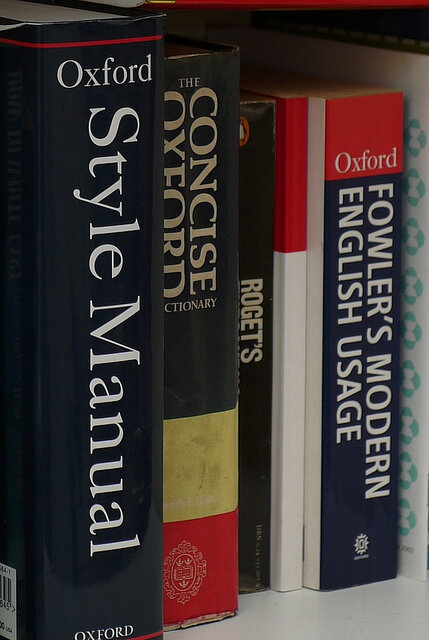
Read MoreObserve any specialist, and they know exactly which tool they need for a particular job. Writers, too, should know what tools they need, and how to use them.
Read MoreIn England we used to have a weekly soap set in a school called Waterloo Road. This had everything you would hope not to find in a school: inappropriate behaviour, theft, even attempted murder – and that was just the staff.
Read MoreDid you know that Raymond Queneau produced a single sonnet that could be read 100 trillion ways?
Read More Lipograms, N+7, the snowball, and other techniques
Read MoreIn recent years I’ve become interested in a branch of writing called Oulipo, and have discovered that it’s not only people associated with the theatre or film who have put their individual stamp on Hamlet. Writers too have got in on the act.
Read MoreStraightforward advice with no persiflage.
Read MoreIn this post I preview two books which you may be interested in. One is a series of autobiograohical stories, beautifully written, while the other comprises six writers explaining why they did what they did in their short story included in the book.
Read MoreThat’s the name of a one-day course I will be teaching at the City Lit on 13 June 2026. It’s already half full.
Read MoreI’m reviewing these together partly because I have a separate review of each one being published in Teach Secondary magazine next month, and partly because they are both concerned with the same subject matter: the Nazi era.
Read More