Hotel Exile: Paris in the Shadow of War
(Rogoyska, Allen Lane, £25)
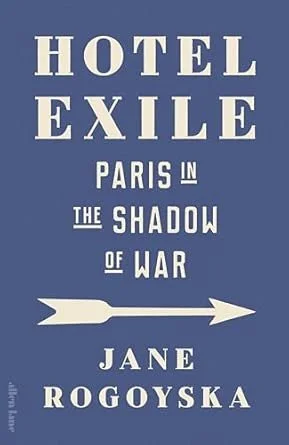
Below you will find two versions of this review. The first is the one I submitted to the editor of Teach Secondary magazine, while the second is the version he actually published.
Hotel Exile: Paris in the Shadow of War
(Rogoyska, Allen Lane, £25)
You settle down to read, and the subject of this particular vignette could be you: a teacher, a student, a mother, a brother. So you are drawn in, almost against your will, into a situation you hope you will never experience, but which you now start to understand on a visceral level. This is, perhaps, Rogoyska’s greatest achievement here: to make you forget you are reading about something that happened before you were born to people you didn’t know.
In describing the rise and aftermath of Nazism she has chosen as her vantage point the Hotel Lutetia, where James Joyce lived and where Picasso was a regular guest. We learn about the stateless people who arrived between 1933 and 1939, how it became a home for the German intelligence service during the war, and then a hospital of sorts for those returning from concentration camps. This book brings history alive.
Reviewed by Terry Freedman
Published version
Settling down with this book, you start to realise that the people you're reading about could easily be you - a teacher, a student, a mother, a brother. You find yourself drawn in, almost against your will, into a situation you hope you'll never experience, but which you now begin to understand at a visceral level.
Rogoyska somehow manages to make you forget that you're reading about something that happened before you were born, to people you didn't know. In describing the rise and aftermath of Nazism, she chooses as her vantage point the Hotel Lutetia, where James Joyce lived and where Picasso was a regular guest. We learn about the stateless people who arrived there between 1933 and 1939, how it later became a wartime home for the German intelligence service, and then a hospital of sorts for those returning from the concentration camps. A book that truly brings history alive.
Reviewed by Terry Freedman
This review was first published in Teach Secondary magazine. To comment on it, and to read an alternative version, please read this: Compare and Contrast #9