Below you will find two versions of a book review. The first is the one I submitted to the editor of Teach Secondary magazine, while the second is the version he actually published.
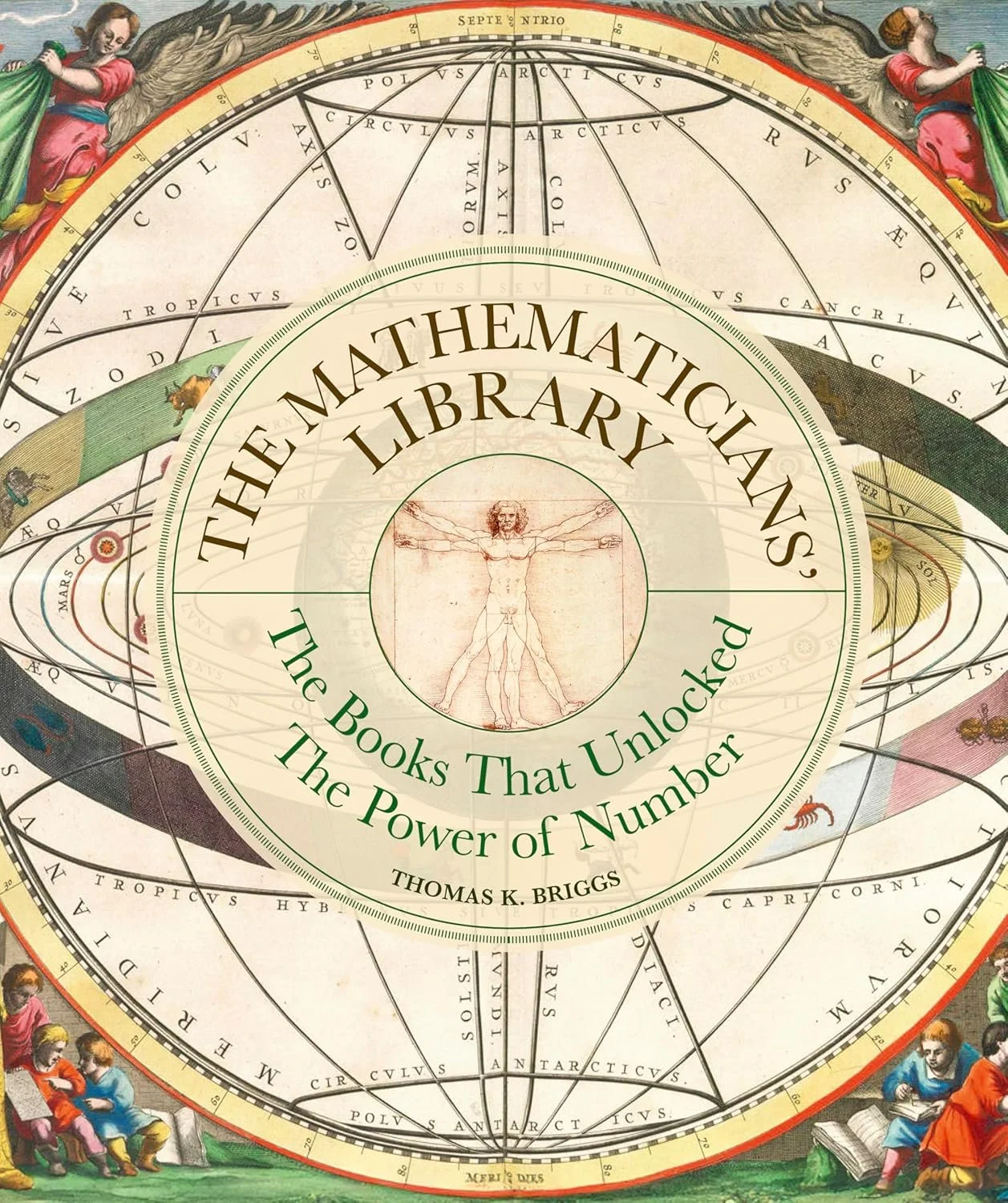
The Mathematician’s Library: The Books That Unlocked The Power Of Numbers
My version
The Mathematicians’ Library
(Briggs, Ivy, £281)
Generations of school students have asked their maths teacher what the point of this is, where “this” is, say, Pascal’s Triangle. Yet, as Briggs makes clear, even problems that did not appear to have much bearing on maths at the time have contributed to our mathematical understanding and even the development of new fields of study.
This wide-ranging book takes in probability, fractals, astronomy, Babbage, Lovelace, and a host of other areas and people.
It is a feast of a book: beautifully produced, lavishly illustrated, and (surprisingly!) readable. Perhaps Briggs’ main achievement here is to make maths inviting, intriguing and even exciting. We learn about many unsung heroes who have contributed to the subject over thousands of years, as well as a few key texts that have been published, along with thumbnail sketches of their contents.
Maths teachers looking for something with which to inspire their students will almost certainly find it here.
Published version
Generations of school students have asked their maths teachers what the point of this is - where 'this' is, say, Pascal's triangle. As Briggs makes clear, however, even problems that didn't seem to have much bearing on maths at the time have since contributed to our mathematical understanding, and sometimes given rise to whole new fields of study.
This wide-ranging book takes in probability, fractals, astronomy, Babbage, Lovelace and a host of other areas and people. It's a feast of a book - beautifully produced, lavishly illustrated and surprisingly readable.
Briggs' key achievement is to make maths seem inviting, intriguing and exciting. We learn about many of the unsung heroes who have contributed to the subject over thousands of years, as well as some landmark texts, complete with thumbnail sketches of their contents.
Maths teachers seeking fresh inspiration for their students will almost certainly find it here.
This review was first published in Teach Secondary magazine. To comment on it, and to read an alternative version, please read this: Compare and Contrast #9