State of Ridicule: A History of Satire in English Literature
(Dan Sperrin, Princeton University Press, £30)
This article contains two versions of my review. The first is the one that was published in Teach Secondary magazine. The second is the one I actually submitted.
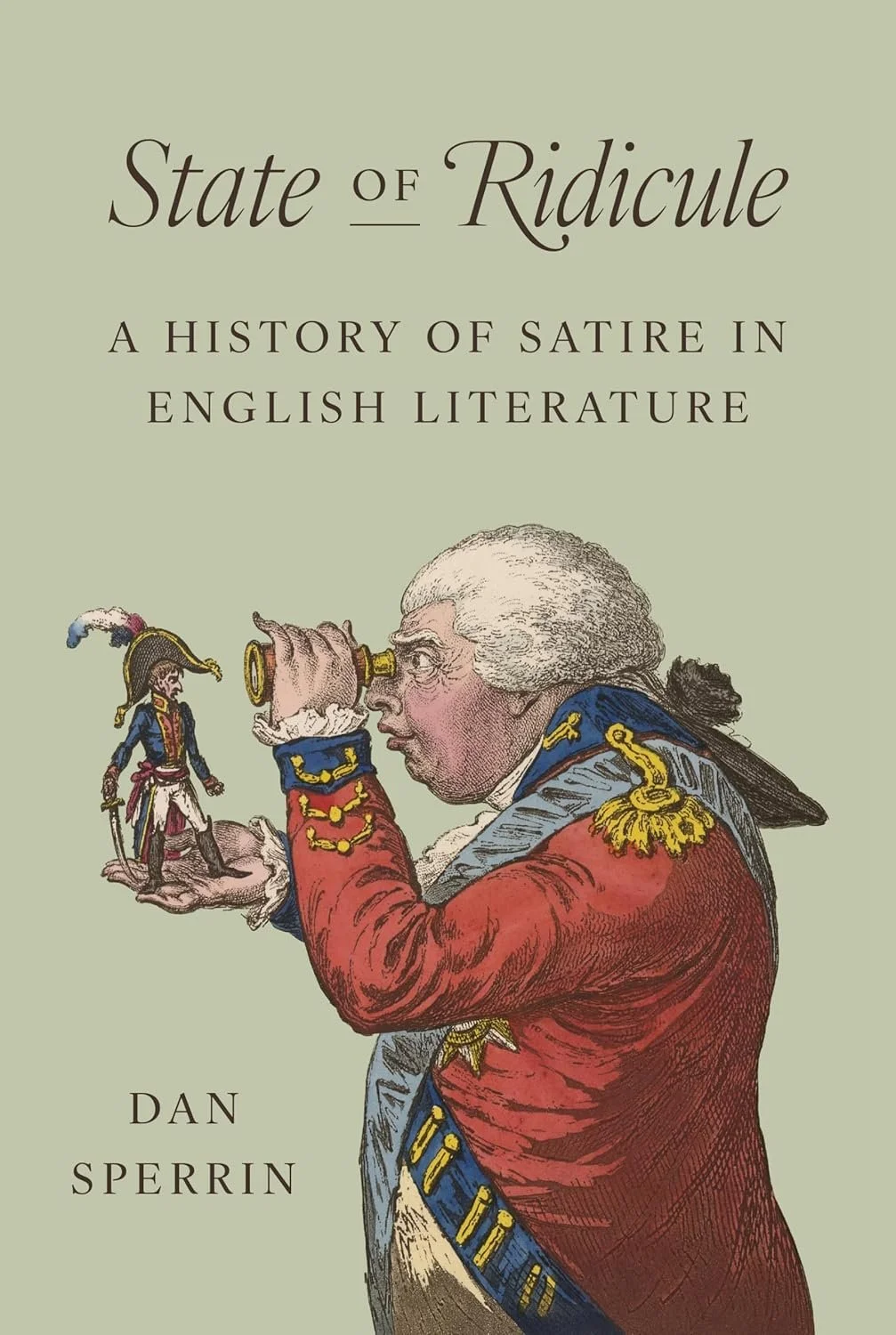
Click the here to see this book on Amazon (affiliate link)
The published review
This is an encyclopaedic work focused on political satire. Thus, while there is much discussion of arch-satirists such as Swift, you will find no mention of, for instance, Jane Austen or Oscar Wilde.
As a reference book, I don't think it can be bettered. There's a huge amount of information here that can be drawn on by both history teachers and English teachers. Were you aware, for example, that Shakespeare's Julius Caesar may have been a warning to those who dreamt of deposing Elizabeth I? Or that 'Piers Plowman' was an anticlerical invective?
We also find out how one of Charles Lamb's essays was an attack on the Prince of Wales.
Sperrin has provided a wealth of detail that can be used to provide a rich experience for students of politics, history and English literature.
Reviewed by Terry Freedman
The version I submitted
This is an encyclopaedic work focused on political satire. Thus, while there is copious mention of arch-satirists such as Swift, you will find no mention of, for instance, Jane Austen or Oscar Wilde.
As a reference book, I don't think it can be bettered. There is a huge amount of information which can be drawn on by both history teachers and English teachers. For example, were you aware that Shakespeare's Julius Caesar may have been a warning to those who dreamt of deposing Elizabeth I? Or that Piers Plowman was an anticlerical invective? Similarly, one of Charles Lamb's essays was an attack on the Prince of Wales.
Sperrin has provided a wealth of information that can be used to provide a rich experience for students of politics, history and English literature.
(As far as I can tell, the editor only made one change: the word “political” is not bold in his version!)
If you wish to comment on this article, please do so here.