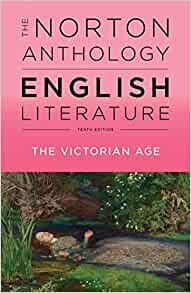
The focus of this course is on the prose and poetry of the Victorian era (1837-1901), against the backdrop of the changes taking place in both society and academia. What’s my verdict?
Read MoreThis book not only contains a huge sampling of both prose and poetry, but places them into an historical context.
Read MoreThe best thing I can say about this book is that it’s great to use as a work of reference.
Read MoreThe Oulipo Compendium, compiled by Harry Matthews and Alastair Brotchie, is in effect a dictionary/encyclopaedia of Oulipo. As such it is both comprehensive and easy to navigate.
Read MoreIf you are a teacher of English or creative writing, you will find this book to be a rich source of material to discuss and analyse with your students. And if you are a writer, this book will I’m sure prove to be a good investment in extending your craft.
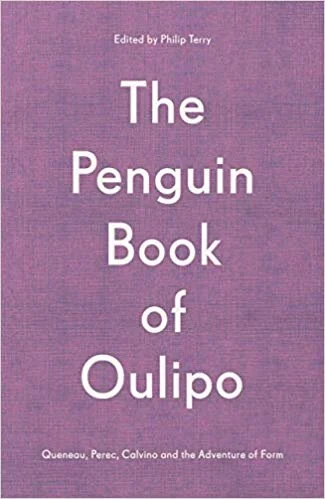
Read MoreThe word Oulipo is an acronym of a French group, Ouvroir de littérature potentielle. This is usually translated as Workshop of Potential Literature, although given its association with the sharing and critique of work on creative writing courses, the word ‘workshop’ might be ditched in favour of ‘work room’.
Read MoreOne of the techniques employed by the Oulipo is known as N+7. This is where you take each noun, and replace it with a word that is seven words on in the dictionary. Of course, results vary according to what dictionary you use. The following article is an N+7 version of my review of the Penguin Book of Oulipo. Enjoy!
Read MoreI’ve spent the last term on a course called Great European Short Stories. Here are my views on the course, the tutor, and the other courses of his that I’ve attended.
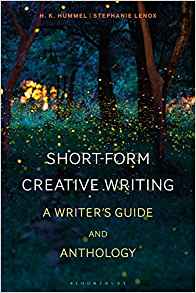
Read MoreShort-form writing is neither quick nor easy, but the effort is, in my opinion, worth it. This book explores the form with useful information, challenging exercises, and interesting examples.
Read MoreMy first foray into the world of Oulipo.
Read MorePerhaps a useful aim of writers is to lead the reader to put the book or article down, and disappear in a flight of imagination. After all, surely one measure of success is that what you’ve written led someone to think of something, or to make connections, that had not occurred to them before?
Read MoreThis is a very useful reference book for anyone who is serious about online journalism.
Read MoreWith children as the target audience, this book is a fair-paced romp through the history of paintings from cave paintings to the present day. All that in less than 100 pages!
Read MoreRecently, I’ve been writing about my experiences of listening to documents on the Kindle Fire. The headphones I’ve been using for this purpose is the Lindy BNX-60 pair. Here’s what I think of them.
Read MoreThe Kindle Fire has a text-to-speech facility. I’ve been using it to listen to a book in the form of a pdf document. Here’s my evaluation of it.
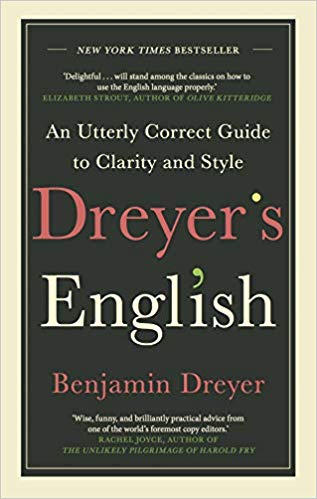
Read MoreA no-nonsense style guide that manages to be both humorous and readable too.
Read MoreIf you’re in London, you might be interested in this exhibition on the history of writing, at the British Library. Here are my views on it.
Read MoreWhat’s a book about epilepsy doing on a writing-related website? Read on and find out.
Read MoreWhy is students’ writing so awful, generally speaking, that employers complain about it? John Warner has some interesting ideas about why this might be the case.
Read More