Below you will find three versions of each of a book review. The first twoare the ones I submitted to the editor of Teach Secondary magazine, while the second is the version he actually published. In this article I invite readers to say which version you like, and why. If you wish to leave a comment, please subscribe to my Write\! newsletter and comment on the article there.
(Xandra Bingley, Notting Hill, £11.99)
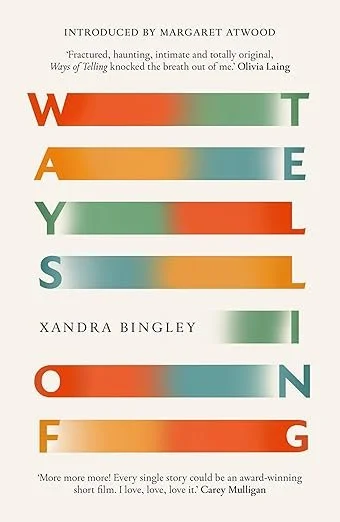
Click the pic to see this book on Amazon (affiliate link)
This is a book for which there are three reviews. I wrote a semi-humorous version that used the literary technique of synaesthesia. This is where you describe one sense in terms of another. I wasn’t sure whether to send that in, and of wrote a more “straight” version. I half thought (to myself) of sending both versions in and letting the editor choose. I mentioned the situation in my Eclecticism newsletter, and Beth T (BethOfAus) suggested I send both in and allow the editor to select the one he preferred. That’s what I did, and to my astonishment he chose the somewhat outlandish one. Who says editors don’t have a sense of humour?
So what follows is the straight version, the outlandish version and the published version, in that order. If you had been the editor, which one would you have chosen?
My straight version
Bingley writes about slices of her life in short, easily digestible, chapters, in no particular order. Thus it’s an example of memoir rather than autobiography. There is no doubt that the writing is beautiful. Words tumble over each other, often unimpeded by punctuation or quotation marks.
The effect is that you find yourself feeling happy, or poignant, or reflective, without quite knowing why, until you go back over the text with a fine toothcomb. It reminds me of Under Milk Wood. Personally, I find it a little too rich. However, the prose is effective in that it is very cleverly crafted. You’ll find onomatopoeia, oxymorons and not too many adverbs or adjectives. In other words, it’s an English teacher’s idea of paradise, and it would be a really good book to use in schools, because it’s an example of different kinds of writing style for students to discuss and, possibly, emulate.
Reviewed by Terry Freedman
The slightly outlandish version
Imagine a Dundee cake. This is exceedingly rich, and guaranteed to raise either your blood pressure, because it costs around three times the price of an ordinary cake, or your blood sugar, because of the ingredients.
Now, if that was served up smothered in double cream or custard, you would have the culinary equivalent of this book.
There is no doubt that the writing is beautiful. Words tumble over each other, often unimpeded by punctuation or quotation marks. The effect is that you find yourself feeling happy, or poignant, or reflective, without quite knowing why, until you go back over the text with a fine toothcomb.
The reason the prose is effective is that it’s very cleverly crafted. You’ll find onomatopoeia, oxymorons and not too many adverbs or adjectives. In other words, it’s an English teacher’s idea of paradise, so it would be a really good book to use in schools.
Reviewed by Terry Freedman
The published version
Imagine an exceedingly rich cake that's likely to raise either your blood pressure (due to it costing three times as much as an ordinary cake) or your blood sugar (because of the ingredients). Add several lashings of double cream or custard and you have the culinary equivalent of this short story collection.
There's no doubt that the writing is beautiful, albeit with words tumbling over each other, often unimpeded by punctuation. It has the effect of making you feel happy, or reflective, but without quite knowing why, at least until you revisit the text with a fine-tooth comb.
The prose is effective because it's very cleverly crafted, with careful deployment of onomatopoeia, oxymorons and other devices, but without getting bogged down in too many adverbs or adjectives. It comes across as an English teacher's idea of the perfect text, and therefore seems worth keeping to hand in school...