Most of us live in the real world rather than an ideal one, and sometimes find it almost impossible to find enough time to write productively. Here are seven things you can try to help ensure that when you do have time you’re not at a loss for words.
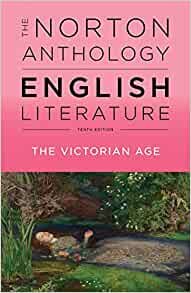
Read MoreThe focus of this course is on the prose and poetry of the Victorian era (1837-1901), against the backdrop of the changes taking place in both society and academia. What’s my verdict?
Read MoreThis book not only contains a huge sampling of both prose and poetry, but places them into an historical context.
Read MoreThe best thing I can say about this book is that it’s great to use as a work of reference.
Read MoreWorking within a limit of 100 words is both terrifying and liberating.
Read MoreThe trouble with detective fiction.
Read MoreIn a recent article I set a puzzle: identifying the hidden homophonics in a short story. Here are the answers.
Read MoreHomophones are words that sound the same but don’t mean the same, such as fare (food) and fare (cost of travel), or their and there. In Oulipo, you take a phrase and think of one which sounds like it. I believe that it is permissible to stretch the definition of “sounds like”, so I have taken advantage of that fact.
Read MoreThe seminar programme at the London Book Fair (10-12 March) seems to be taking shape. Definitely worth checking out what’s in place so far.
Read MoreMy Christmas, Oulipo-inspired message decoded.
Read MoreHere are 12 websites where you can find high quality pictures that are free to use on your own website or blog.
Read MoreThe Oulipo Compendium, compiled by Harry Matthews and Alastair Brotchie, is in effect a dictionary/encyclopaedia of Oulipo. As such it is both comprehensive and easy to navigate.
Read MoreA few things I’m currently reading, plus a puzzle for you.
Read MoreA dozen of the best articles on the Writers’ Know-How website in 2019.
Read MoreHow to use an Oulipo technique involving proverbs to get through writer’s block.
Read MoreYou don’t always need words to get your meaning across!
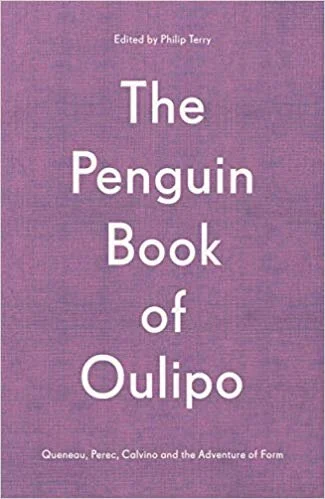
Read MoreIf you are a teacher of English or creative writing, you will find this book to be a rich source of material to discuss and analyse with your students. And if you are a writer, this book will I’m sure prove to be a good investment in extending your craft.
Read MoreYou may not believe this, but film-making and film studies on the one hand, and writing on the other, have a great deal in common.
Read MoreThe word Oulipo is an acronym of a French group, Ouvroir de littérature potentielle. This is usually translated as Workshop of Potential Literature, although given its association with the sharing and critique of work on creative writing courses, the word ‘workshop’ might be ditched in favour of ‘work room’.
Read MoreOne of the techniques employed by the Oulipo is known as N+7. This is where you take each noun, and replace it with a word that is seven words on in the dictionary. Of course, results vary according to what dictionary you use. The following article is an N+7 version of my review of the Penguin Book of Oulipo. Enjoy!
Read More