I submitted my review of this book to Teach Secondary magazine, an educational magazine in the UK. The first review below is what the magazine published. The second one is what I actually wrote! In substantive terms there is little difference between the two, but you may find it interesting to see what the editor altered.
The published review
The Mending of Broken Bones: A Modern Guide to Classical Algebra
(Paul Lockhart, HUP, £24.95)
The two main things I remember from my school algebra lessons are having to memorise formulae and methodology, and needing to tackle exercises at the end of each chapter in our textbooks - but I never really understood any of it. Having now read Lockhart's explanations of how to solve simple and quadratic equations, however, much of it makes perfect sense. I'd even go so far as to say that the processes appear to be obvious. Lockhart writes very engagingly, with some parts of the book even making me laugh out loud - not a response one would usually expect from a book on maths teaching. Some of the later chapters may be quite difficult for non-specialists to follow at first, yet one suspects that Lockhart's words will be compelling enough to make all readers want to persevere.
Reviewed by Terry Freedman
My original review
The Mending of Broken Bones: A Modern Guide to Classical Algebra
(Lockhart, HUP, £24.95)
The main two things I remember about algebra lessons at school are memorising formulae and methodology, and improbable exercises at the end of each chapter in the textbook. But I never really understood any of it. Once I had read Lockhart's explanations of how to solve simple and quadratic equations, it all made perfect sense. I’d even go so far as to say, it all seemed obvious. Lockhart writes very engagingly – some sentences even made me laugh out loud, which is not a response are usually associates with maths. The text is spiced with interesting snippets of the history of mathematics. Some of the later chapters are quite difficult for the non-specialist, but Lockhart has made them interesting enough to make the reader persevere – or, at least, not to throw the towel in straight away! His excitement about the subject is tangible.
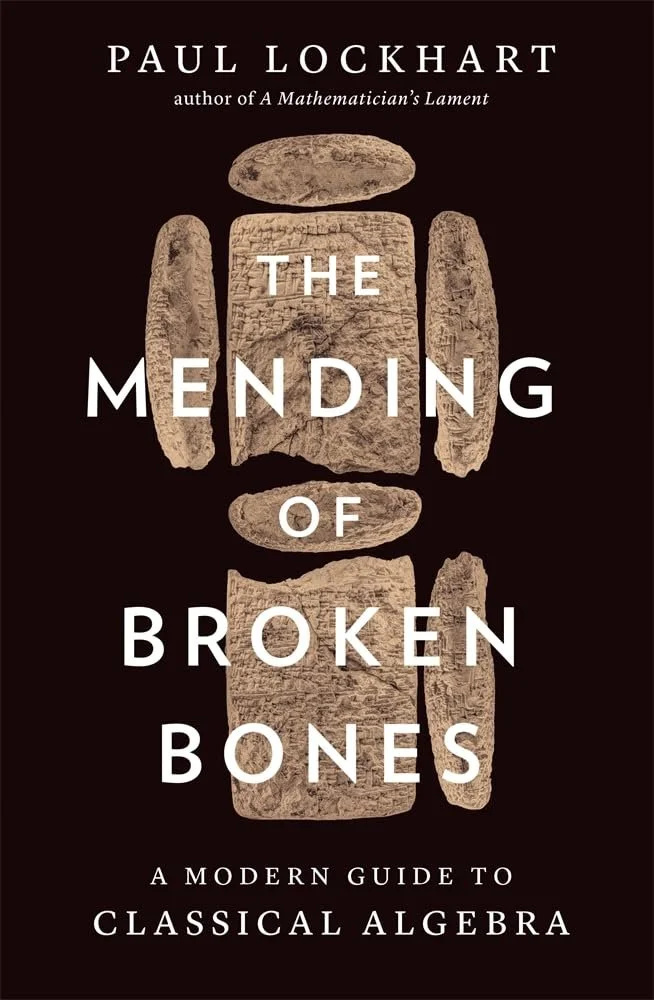
Click the pic to see this book on Amazon (affiliate link)