 It is almost a year since I suggested 7 reasons writers should blog. I’ve recently discovered another one.
Writing a book as a blog
It is almost a year since I suggested 7 reasons writers should blog. I’ve recently discovered another one. It is almost a year since I suggested 7 reasons writers should blog. I’ve recently discovered another one.
 How do you know if you are, objectively speaking, a success as a writer?
Although I may be accused of taking too simplistic an approach to this question, I really do think that it comes down to just one thing.
Well, in practice, of course, there are many potential indications of success. For example, people telling you they like what you write. People asking when your next book is coming out. That sort of thing.
However, nice as such accolades are, they don’t pay the rent, and talk is, or can be, cheap.
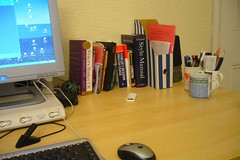 What do you need to be a successful writer? Here are my thoughts on the seven main attributes you need to have in order to make it as a writer – or at least, to give yourself a fighting chance! I believe these hold true for any genre, and any form (ie book or article).
 What are the characteristics of writing that is enjoyable to read? Is enjoyment purely a subjective thing, or are there some objective criteria? I don’t know! But here is my thinking aloud on the matter.
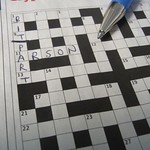 If, like me, you have a love of language, you should explore the strange world of the cryptic crossword. Unlike the plain crossword, the cryptic variety requires more than providing a synonym for a word or phrase. Rather, it involves working out what the clue is getting at.
That sounds much more difficult than the task facing you in an ordinary crossword, doesn't it? In fact, much of the time it's easier, for one simple reason.
 New words are always interesting, I think, and not just the ones that have been inspired by technology. But before I say any more about that, I feel the need to get something off my chest. Don’t worry, I won’t make this a long post: the last thing I want is people tweeting me to say TL;DR (too long; didn’t read).
 According to newspaper reports, the educational academic Sugatra Mitra, lessons in spelling 'have no place in 21st century schools'. His view is that the technology will sort it out for you.
I suppose he is thinking of things like predictive text, because he says:
 Here are a couple of odd uses of language I came across recently. At least, they made me sit up and take notice, and perhaps that was the point.
 Books of quotations are important, I think, for those odd occasions you need to have one. And that phrase “odd occasions” is the rub: do you actually need to buy a reference book for occasional use when there is so much available on the web these days?
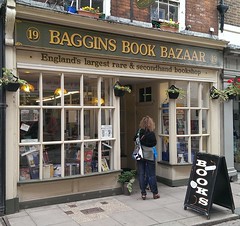 Heaven for me is being ensconced in a bookshop, later followed by my supping a latté while exploring my new-found gems. Second-hand bookshops are by far the best kind, because you never know what you might come across that you would almost certainly not happen upon in a new bookshop or on Amazon. After all, it was in a second-hand bookshop that I came across a copy of a writers’ magazine published in 1937 – and it didn’t cost me the earth either!
I may be experimenting with a new look to this blog, so try not to be alarmed if it looks different in the near future.
It may happen several times!
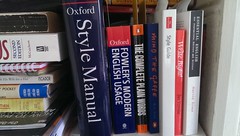 There are two broad kinds of style guide. There is the generic type, containing advice on such things as whether to use “different from” or “different than”. And there is the specific type, ie specific to a particular publication. For example, should “internet” be spelled with a lower case “i”, or as “Internet”?. The specific style guide will tell you.
You need both types, of course, but unfortunately it’s not quite as simple as your needing only two books or two documents.
Before anyone tells me that the plural of “thesaurus” should “thesauri” rather than “thesauruses”, which is what I’d have thought myself, apparently it can be either, according to the Oxford dictionary.
I find a thesaurus to be indispensable on those occasions when the most appropriate word is on the tip of my tongue,
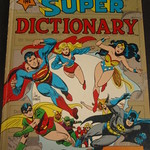 I don't care how good a writer you are, at some point you are going to need dictionary. Whether you need to check the meaning of a word, or the sort of context in which it’s used, or simply to double-check how it is spelt, you will want to use a dictionary. The question is, which one?
 If you are going to put together a Reference Toolkit, having been convinced by my article A writer’s Reference toolkit: Why?, what should be included?
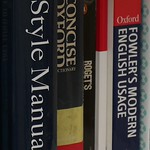 A couple of years ago I wrote an article called Some of my reference books, which described some of the reference books I use, and why. Two years on, I thought it would be interesting to revisit this subject, but in a little more depth.
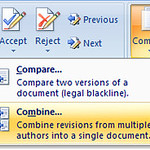 Suppose you’re in this position: you have created a document. You have sent it to someone else for their comments or to edit it. They have now sent it back to you, but in the meantime you have made some changes to your original. How are you going to sort out this mess?!
If you and your colleague have been using Microsoft Word, then you don’t have a problem. All you need to do is use the Combine Documents feature.
 On one of my visits to second-hand bookshops I picked up a copy of The Writer, from January 1937. There are some things which haven’t changed, but the technology definitely has!
 I’ve been playing around with a word processor called Jarte. It isn’t specifically intended for use by writers as such (as far as I know), but it does have some features which many writers will find useful.