Writers' block is just one of many writerly ills. In this book, Roy Peter Clark offers over 200 practical tips.
Read MoreProfessional writer
Getting paid is nice too!
When it comes to being paid for your work, it's good to know when payment is expected. You can achieve this quite simply.
Read More7 ways to manage technical support for writers
 Most writers use a computer of some sort these days, and the thing about computers is that they go wrong. It’s not an ‘if’, but a ‘when’. In my experience, it happens when you have a deadline for the same day or when you were just about to dash out of the door to start your holiday. Unless you’re working for a company or some sort of co-operative, chances are you are your own technician. So what can you do to minimise the pain?
5 Ways to further your writing project when you can’t work on it directly
 There can be several reasons why it is not possible to work on your book, blog or other writing project. Maybe you’ve saved it in the cloud, and don’t have an internet connection. Perhaps you didn’t think you would have the time to write, so didn’t take your laptop with you. Or maybe you’re waiting outside the school gates. Whatever the reason, you can usually still do something. Here are the strategies that I’ve found work for me.
7 ways to tackle writing a book when you need to write articles too
 My aim is very simple: I should like to generate a passive income. I could do so by selling affiliate products or by having ads all over the place. But I prefer to do it, mainly at least, by writing.
But there’s a problem.
How to make a living from writing: new video series
 Joanna Penn has launched a new series of free videos on the theme of how to make a living from writing.
My Scrivener Dashboard
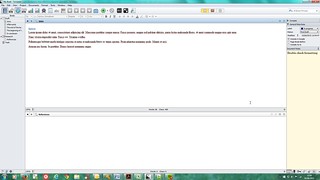 After a year of prevaricating about using Scrivener as my main writing tool, I am rapidly heading towards doing so. The reason is that I discovered that I can have a view on my work in which I can see everything I need to see all at the same time. I call this “My Scrivener Dashboard”, and in this post I point out what each part of it is, and why I am starting to fall in love with Scrivener.
Freelancing vs authoring Part 2: Authoring
 If, like me, you enjoy writing and you would like to earn money from it, should you go down the freelance writing route or write books, or both? In the first part of this two-part series I looked at the advantages and disadvantages of freelancing, ie writing articles for newspapers and magazines. In this part, I consider the advantages and disadvantages of authoring, ie writing books.
Review of Polish Your Fiction
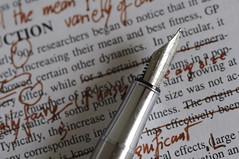 Polish Your Fiction is another title in Jessica Bell’s “in a nutshell” series. It is subtitled “A quick and easy self-editing guide”, which is a very apt description.
Freelancing vs authoring Part 1
 If, like me, you enjoy writing and you would like to earn money from it, should you go down the freelance writing route or write books, or both?
From my experience, here are the pros and cons of freelancing.
5 reasons that writers should use spreadsheets
Many people have the impression that spreadsheets are complicated, used for number-crunching, and hold little of interest to the writer. However, as an organisational and time-saving tool, a simple spreadsheet is hard to beat. Here is how I use them in my writing.
Read MoreMoney, Money, Money
This article is not about writing or related matters as such; it's more about my experience of attitudes to paying for work. It's worth reading, I think, if any of the following applies to you:
- you're thinking of asking a writer to do some work
- you have some students who are hoping to earn money from writing
- you are thinking of writing yourself.
What do writers earn?
 A recent piece of research from the Authors’ Licensing and Collecting Society (ALCS) makes for some depressing reading – unless you are extremely optimistic.
The figures relate to 2013, and are not as good as their equivalents of ten years ago, in 2005. Well, not for the most part anyway. Here are some of them:
A Self-publishing journey: Why self-publishing?
After quite a long gap, I’ve decided to self-publish a few books. I thought it might be interesting to write up my journey, because perhaps the research I undertake will be beneficial to others.
Today I’m looking at why have I chosen self-publishing rather than traditional publishing.
A self-publishing journey: what IS self-publishing?
After quite a long gap, I’ve decided to self-publish a few books. I thought it might be interesting to write up my journey, because perhaps the research I undertake will be beneficial to others.
Today, I’m clarifying what the term self-publishing means because, unfortunately, it’s not as obvious as you might think.
A Self-publishing journey
Starting tomorrow, a new series of occasional posts about my research into self-publishing.
The first two articles are:
Review of Business for Authors: How to be an author entrepreneur, by Joanna Penn
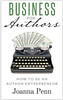 There are lots of books about writing – so many, in fact, that you could comfortably avoid doing any writing at all simply by setting out to read them all. There does come a point where you need to actually sit down and write. But if there is one book that is worth taking time out to read, and use as a reference, it's Business for Authors.
4 Reasons to get published
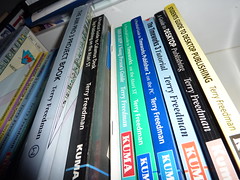 It's important to be published by a traditional publisher
Image by Terry Freedman via Flickr
In this day and age, in which anyone can publish and distribute their books electronically, or self-publish them by going down several routes (none of which need include the traditional vanity publisher), why should anyone bother approaching a traditional publisher? After all, very few of the thousands of manuscripts that publishers receive find their way into book form, and of those that do, very few hit the big time. There are, in fact, at least 4 reasons to try to get published by the age-old process of going to publishers.
Websites for Writers: Writer Beware
 Writer Beware is a blog that alerts writers to scams, and possible scams. In some respects it is like a consumer organisation for writers.
Review of Your Creative Writing Masterclass
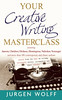 I love books that you can dip into, and I am always interested in what writers have to say about their craft. Jurgen Wolff’s Your Creative Writing Masterclass has proved to be highly rewarding on both counts.