In around ten days’ time I will be teaching my creative writing course about the Oulipo, a French writing movement that centres on using constraints in order to produce writing. One of the co-founders of the movement, Raymond Queneau, characterised Oulipians as rats who build the labyrinth from which they they then try to escape.
My course is aimed at writers, but the Oulipo has much to offer readers too. One of the most famous works of Oulipo is A Void, by George Perec.
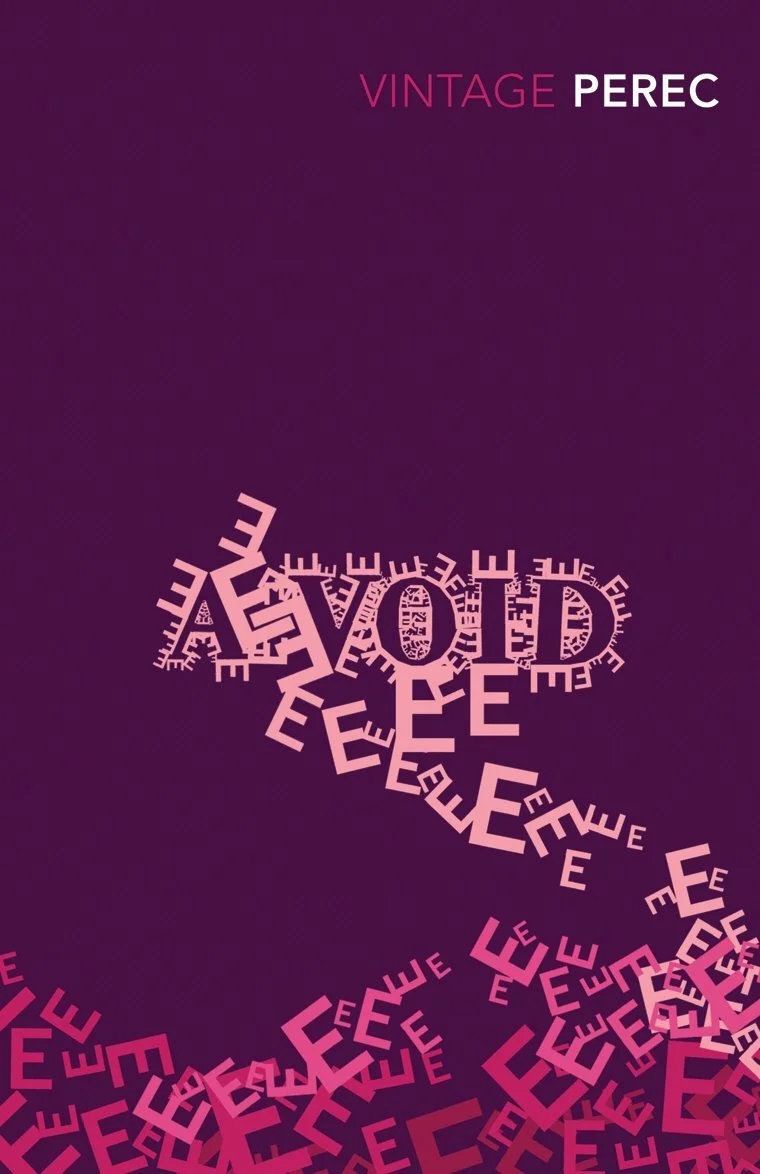
Click the pic to see this book on Amazon (affiliate link)
This has been written without the letter ‘e’. It’s a detective story in which the ‘e’ is missing, but which it is also forbidden to mention. This may sound like just an elaborate technique (writing without a particular letter is kinown as a lipogram), but a somewhat deeper significance has been suggested.
Perec’s father died in action in 1940. His mothern was murdered in Auschwitz in 1943. So does the missing ‘e’ represent his missing parents? Because you can’t use the words mere (mother) or pere (father) without the letter ‘e’. Some people have wondered if the missing ‘e’ is meant to represent the missing European Jews. In fact, Perec couldn’t even write his own name without using the letter ‘e’, and there is speculation that Perec’s preoccupation with place was to do with his constant search for a safe place such as the one he enjoyed in his early childhood.
This is one of the characteristics of Oulipian writing that I enjoy: the stuff that lies beneath the surface in several works.
Incidentally, if you’re interested perhaps in taking one of my courses, you can grab a flyer about my next three. Believe it or not, I have even planned the outline and structure of the course I’m running from next January to March. Here’s the flyer: