I have started to read this so I thought I would share a few first impressions. (Anything more detailed would be inappropriate, given that I haven't even finished the first chapter.)
There are seven chapters in all, not counting the introduction, the afterword and the usual end sections. These cover the novel to 1760, to 1830, to 1860, to 1890, to 1930, to 1960, and to 2000.
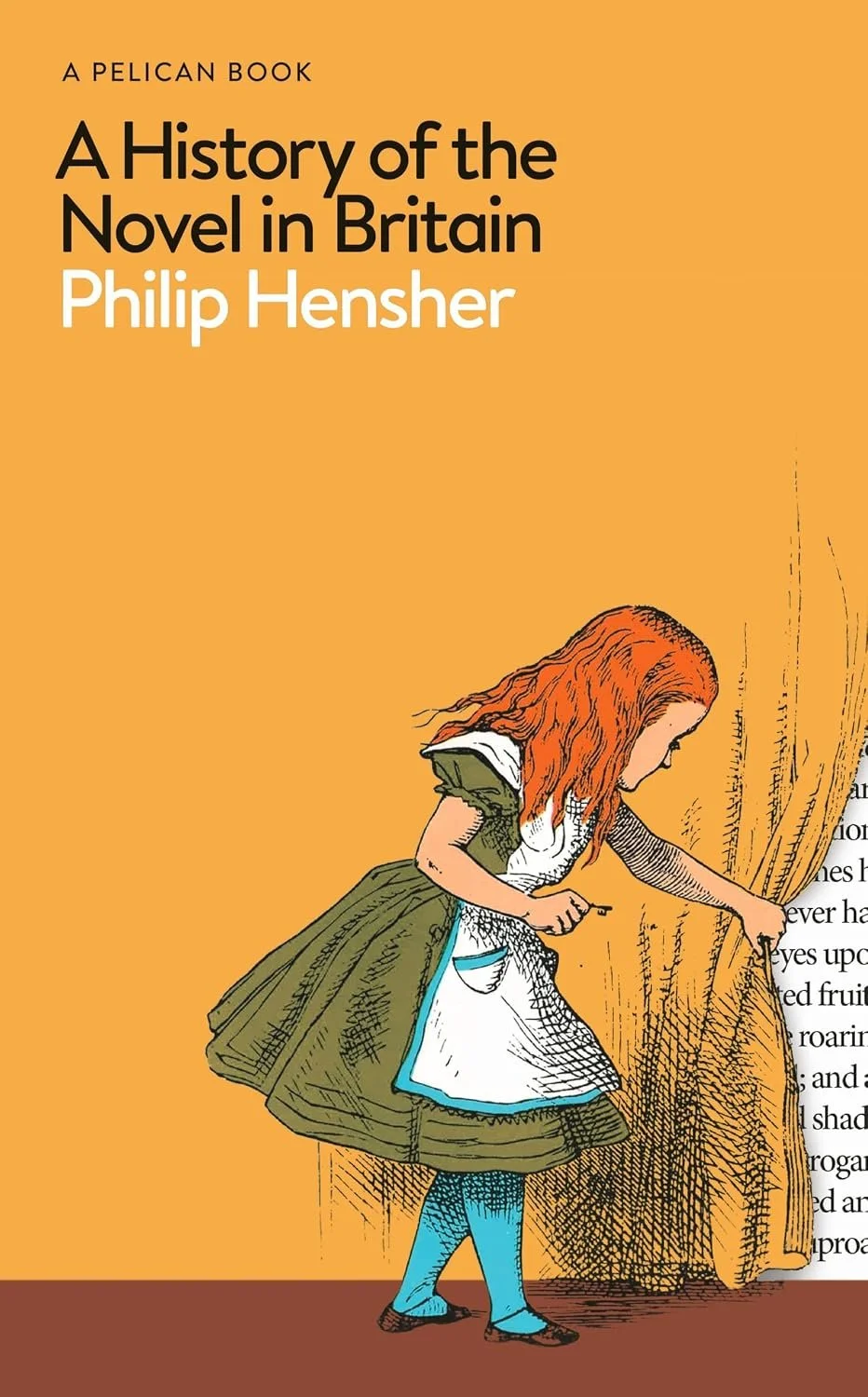
Click the here to see this book on Amazon (affiliate link)
From what I've read so far, the developments in the novel are very much tied up with the milieu in which they are written. I've always thought that having an understanding of the bigger picture is very useful. For example, understanding what was going on when certain economic theories were born, or the long-term background to particular historical events, helps one to understand the thing in question much better.
Thus in the context of novels and their writers, one reason for Defoe's prolificity was that authors in the early 17th century were able to obtain only a one-off payment — it was the bookseller who earned the royalties. (Composers were in a comparable position.)
One thing which did surprise me was the presence of non-British authors listed in the index. However, Hensher explains in the Introduction that he didn't want to exclude writers on the basis of their nationality if some or all of their work took place in Britain, or if they had significant impact on the British novel. Hence other writers include Nabokov, Naipaul, Borges, Cervantes, Calvino, and others.
Because Hensher has read so many novels, the reader feels in safe hands. From what I've read so far, I feel very confident in recommending this to anyone interested in the development of the novel.
Bookshelves with cat -- Terry Freedman