What makes a piece of writing enjoyable to read?
Read MoreOn this day #2: Enjoyable writing


Archives
What makes a piece of writing enjoyable to read?
Read MoreHow can you save a lot of time and boring repetition when it comes to formatting in Word?
Read More
Video surveillance: another example of tech-inspired jargon? Photo by Terry Freedman
New words are always interesting, I think, and not just the ones that have been inspired by technology. But before I say any more about that, I feel the need to get something off my chest. Don’t worry, I won’t make this a long post: the last thing I want is people tweeting me to say TL;DR (too long; didn’t read).
Read MoreSolving one problem in a writing program like Word can lead to others.
Read More
Blog reading, by Terry Freedman
You don’t always have to visit a blog to see the most recent article. Although it has fallen into disuse to some extent in recent years, there is a way of having the blog posts come to you. All you need are what is called an RSS feed, and an RSS feed reader.
Read MoreThere’s nothing wrong with legitimate criticism — in fact, it should be welcomed. But don’t mistake nasty put-downs for useful advice.
Read More
Photo by Andrew Neel on Unsplash
Here is a quick round-up of this week’s most popular posts from the Writers’ Know-How website.
Read More
Is it a good idea to lock down your ebooks to prevent piracy?
Read More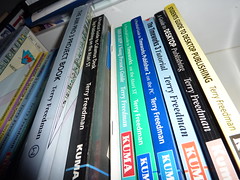 It's important to be published by a traditional publisher
Image by Terry Freedman via Flickr
In this day and age, in which anyone can publish and distribute their books electronically, or self-publish them by going down several routes (none of which need include the traditional vanity publisher), why should anyone bother approaching a traditional publisher? After all, very few of the thousands of manuscripts that publishers receive find their way into book form, and of those that do, very few hit the big time. There are, in fact, at least 4 reasons to try to get published by the age-old process of going to publishers.